EASE has prepared a short summary on one of the following energy storage application groups - Services to Support Distribution Infrastructure.
November 2021 / Reports and Studies
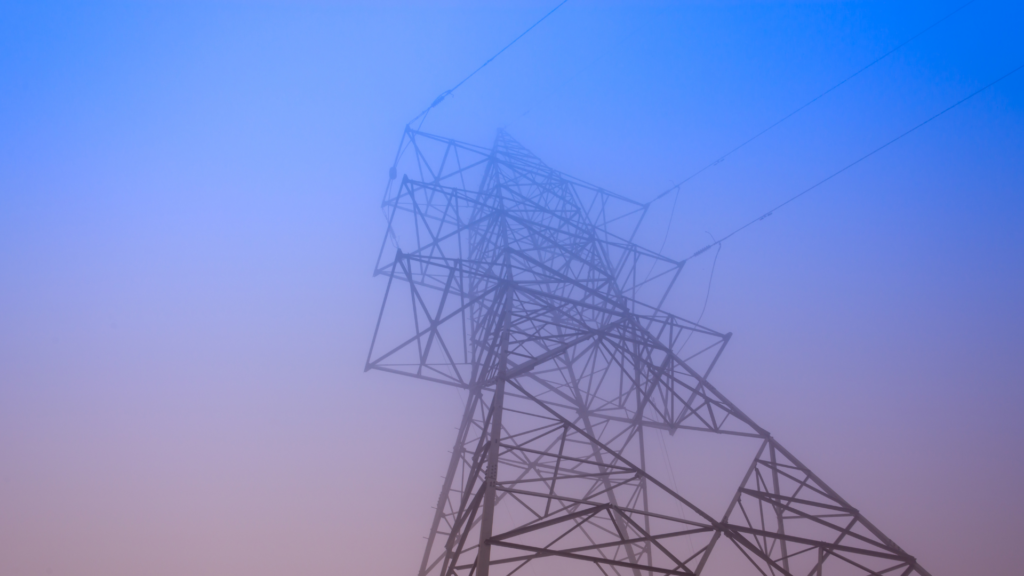
Services to Support Transmission Infrastructure
The Task Force on Segmentation of Applications has developed the Services to Support Transmission Infrastructure Report, among other application descriptions. This work builds on the Summary of Energy Storage Applications published in June 2020.
This overview provides a summary of different energy storage applications, focused mainly on the electricity system. Transmission infrastructure services could be provided by energy storage could as an alternative or complement to traditional transmission infrastructure assets.
Services to Support Transmission Infrastructure are composed of three key systems:
Transmission Investment Deferral: deferring transmission infrastructure upgrades and solving transmission congestion issues by installing energy storage systems instead of new lines.
Angular stability: use of energy storage to charge and discharge high levels of energy in short periods when an accident occurs, overall improving angular stability of the system.
Transmission Support: use of energy storage to improve the performance of the transmission system by compensating for electrical anomalies and disturbances such as voltage sag, unstable voltage, and subsynchronous resonance.
Energy Storage Europe replies to the European Commission’s public consultation on the Battery Booster Facility. On 16 December 2025, the European Commission announced a Battery Booster Strategy, within the Automotive Action Plan. The Strategy includes a Facility of EUR 1.5 billion in the form of loans for projects in the production of battery cells in Europe.
Energy Storage Europe's position paper, "Ensuring System Stability in Europe: The Role of Energy Storage in Providing Inertia", focuses on how the EU can implement a cost-effective and technologically neutral approach to procuring inertia. It also outlines how such an approach can be firmly embedded within a harmonised European methodology for assessing and monitoring inertia needs across synchronous areas.
This position paper, prepared by the Energy Storage Europe Association, assesses the system value of long-duration energy storage, identifies barriers to deployment, and proposes recommendations to better align European energy, industrial, and financing frameworks with the long-term flexibility needs of a fully decarbonised power system.
In this position paper, the Energy Storage Europe Association calls for a shift from today’s “first-come, first-served” queue system to a more efficient, strategic, and transparent framework that recognises the unique value of energy storage for reducing congestion, enhancing flexibility, and making better use of existing grid infrastructure.