Kyoto shares the technology that brings the importance of decarbonizing the industry - this technology is Heatcube. Heatcube is the missing link between renewable energy and Industrial process Heat. The Thermal Battery for our future; providing high volume, stable, electrified heat to industry – the missing link between renewable energy and heat demand.
Renewable energy sources, like wind and solar, are intermittent suppliers. Heatcube is the solution to stabilizing this supply to meet mass industrial demand.
Simultaneous charging and discharging: the molten salt circulation system is designed for separate charging (electrical heating) and discharging (steam generation).
The world is getting warmer and you're still playing with fire. The gas is making steam sick. It's time to make steam clean. We at Kyoto Group enable industry with clean steam in a world powered by nature.
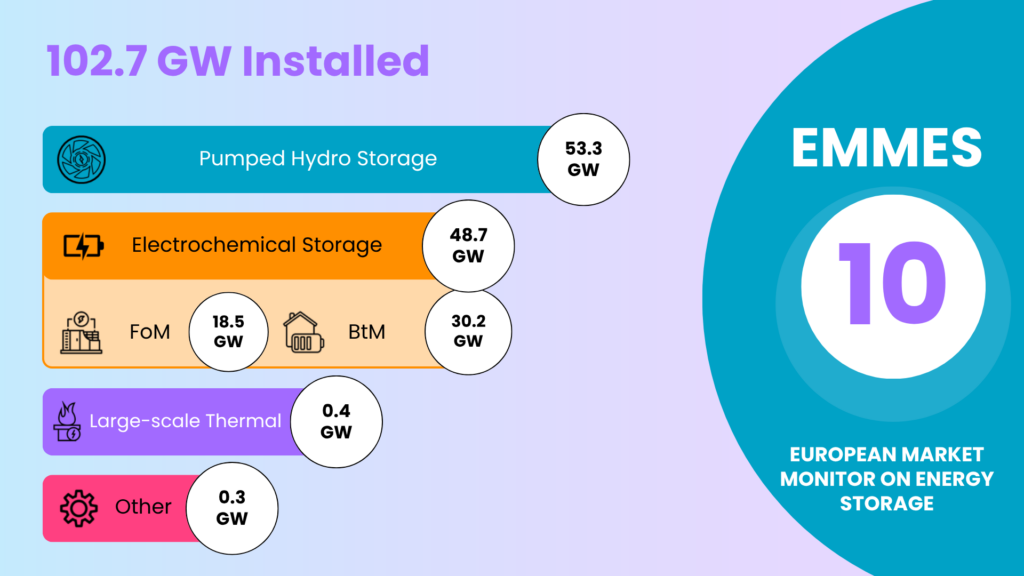
In 2025, Europe surpassed 100 GW of installed storage capacity for the first time, and by Q2 2026 storage overtook nuclear as a source of installed power capacity. With electrochemical storage forecast to grow by a further 153 GW by 2030, energy storage is becoming a core pillar of Europe's future electricity system.
In 2025, Europe surpassed 100 GW of installed storage capacity for the first time, and by Q2 2026 storage overtook nuclear as a source of installed power capacity. With electrochemical storage forecast to grow by a further 153 GW by 2030, energy storage is becoming a core pillar of Europe's future electricity system.
Thermal Energy Storage can help European industry decarbonise, reduce costs, and access new revenue streams. Yet significant regulatory, economic, and financial barriers continue to limit its deployment.
Energy Storage Europe welcomes the proposal for an Industrial Accelerator Act (IAA) and supports its overall objective of strengthening industrial capacity, accelerating decarbonisation, and creating stronger lead markets for strategic clean technologies in the European Union.