In 2025, Europe surpassed 100 GW of installed storage capacity for the first time, and by Q2 2026 storage overtook nuclear as a source of installed power capacity. With electrochemical storage forecast to grow by a further 153 GW by 2030, energy storage is becoming a core pillar of Europe's future electricity system.
June 2026 /
EMMES 10 - June 2026
Europe set to hit 100 GW of energy storage, with more than 115% growth expected by 2030.
The 10 edition of the European Market Monitor on Energy Storage (EMMES) by the Energy Storage Europe and LCP Delta, is now available. Europe added a record 13.5 GW / 26.4 GWh of electrochemical storage in 2025, surpassing 100 GW of installed storage capacity across all technologies. While deployment continues to accelerate, significant opportunities remain across every European market as electrification and renewable energy continue to expand.
Key findings from EMMES 10
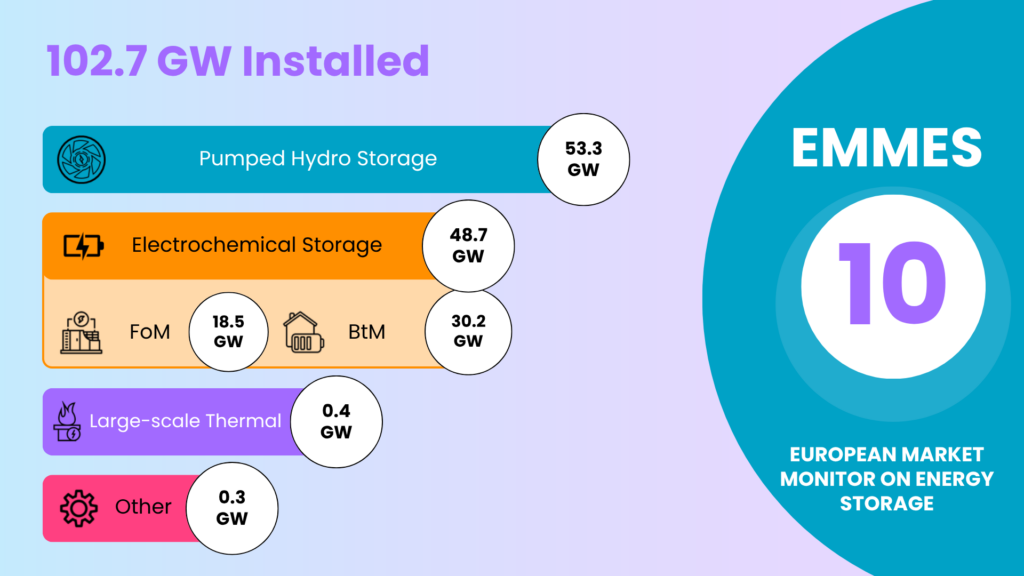
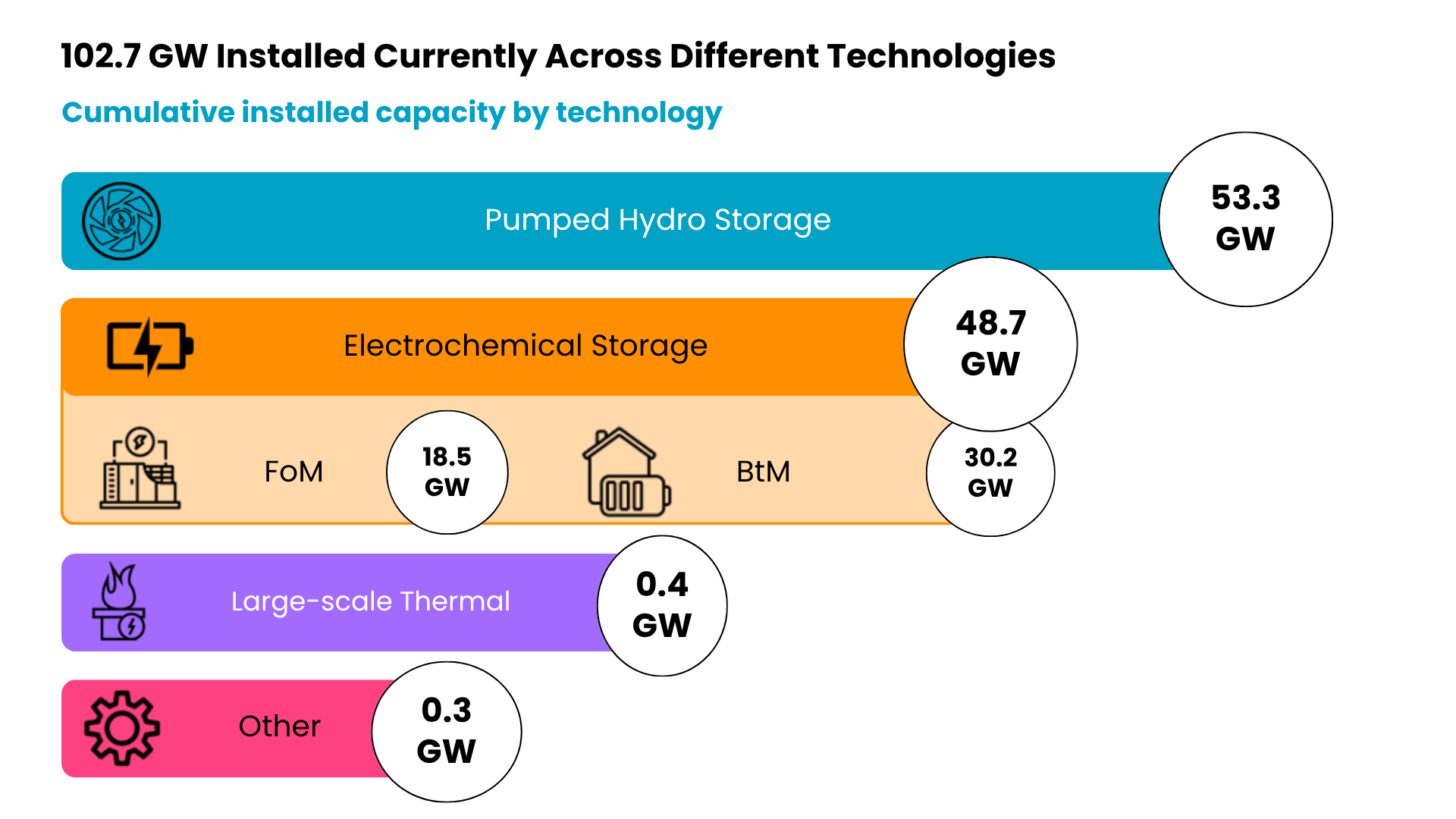
Europe added a record 13.5 GW / 26.4 GWh of electrochemical storage in 2025, bringing total installed capacity to 102.7 GW across all technologies
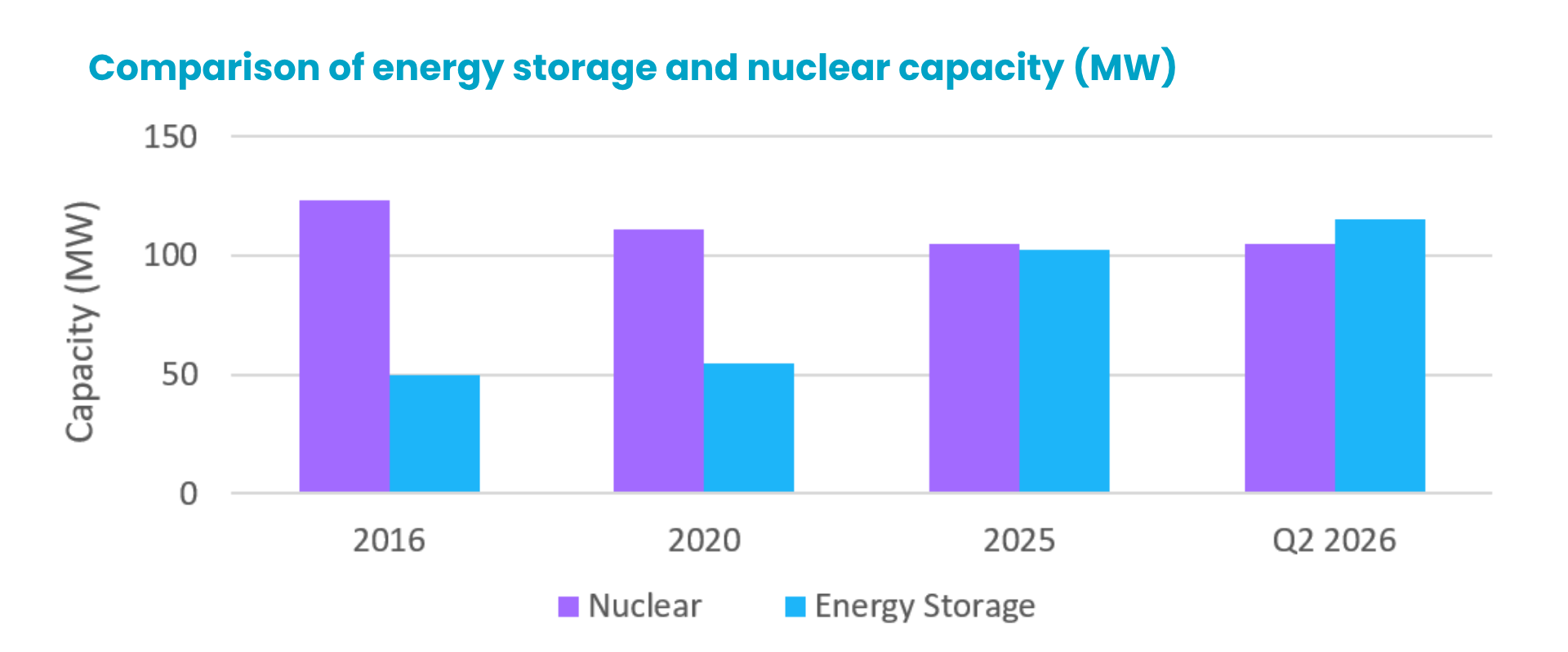
For the first time, energy storage has overtaken nuclear capacity in Europe, while the number of operating reactors continues to decline
Despite record deployment, no European country has yet reached its full storage potential
Forecasts for utility-scale batteries have been revised upward by 25% compared with last year's outlook
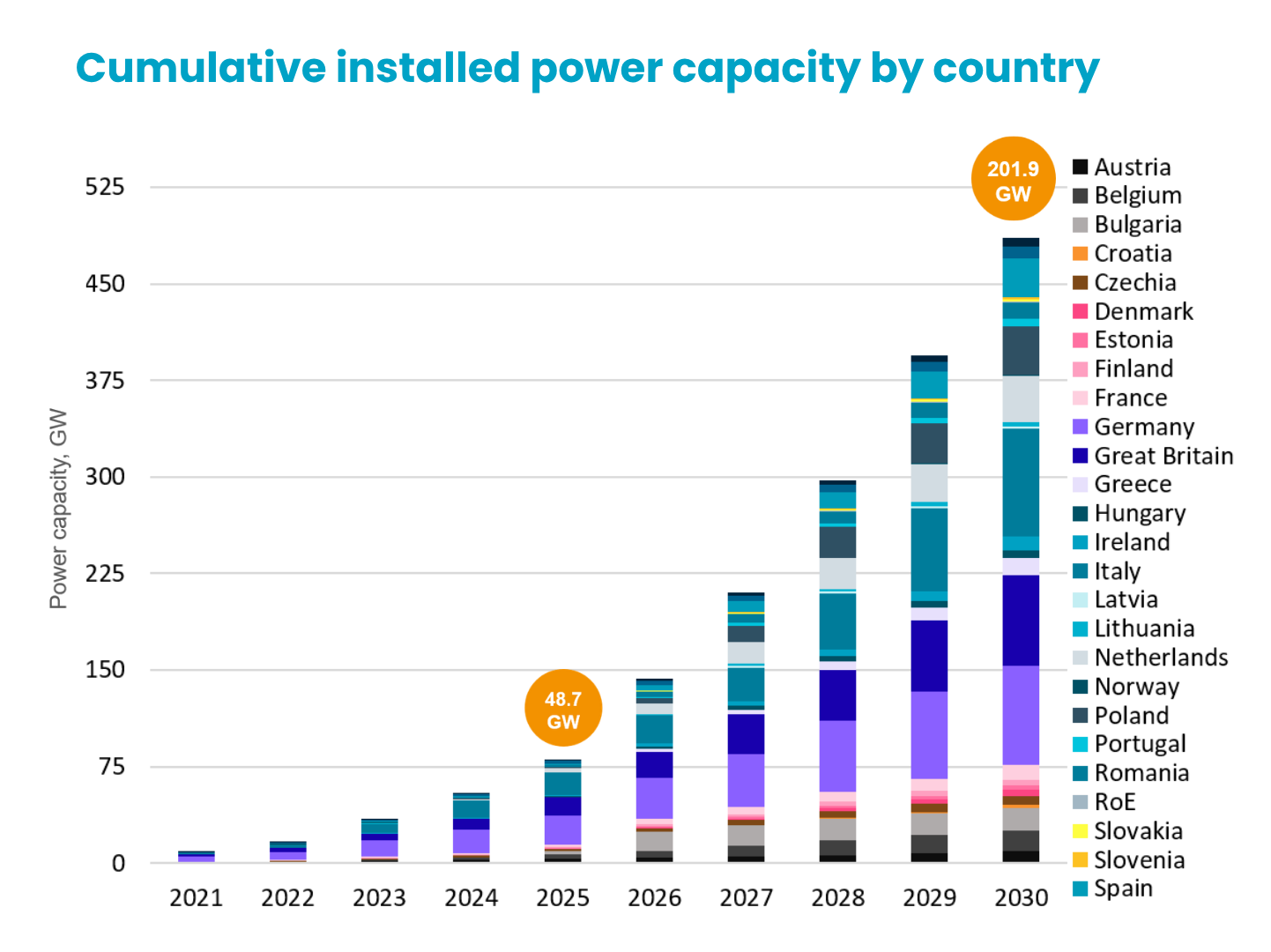
By 2030, an additional 153 GW / 485 GWh of electrochemical storage is expected to be added to European grids
Behind-the-meter storage reached 30.2 GW / 46.2 GWh, driven by solar-plus-storage, dynamic tariffs and electrification
Front-of-the-meter storage reached 18.5 GW / 34.4 GWh, with strong momentum in Great Britain, Italy, Poland and Belgium
In 2025, total installed storage capacity reached 102.7 GW across different technologies.
Energy storage has overtaken nuclear capacity, while the number of operating nuclear reactors has been steadily declining. The shutdown of nuclear plants in Germany has been the biggest contributor to this, removing around 11 GW of capacity, while Great Britain and Belgium have also decommissioned a significant number of reactors since 2016.
Compared with last year's outlook, EMMES 10 raises expectations for utility-scale battery deployment by 25%, reflecting stronger market fundamentals, growing project pipelines and increasing confidence in the role of storage within Europe's future energy system.
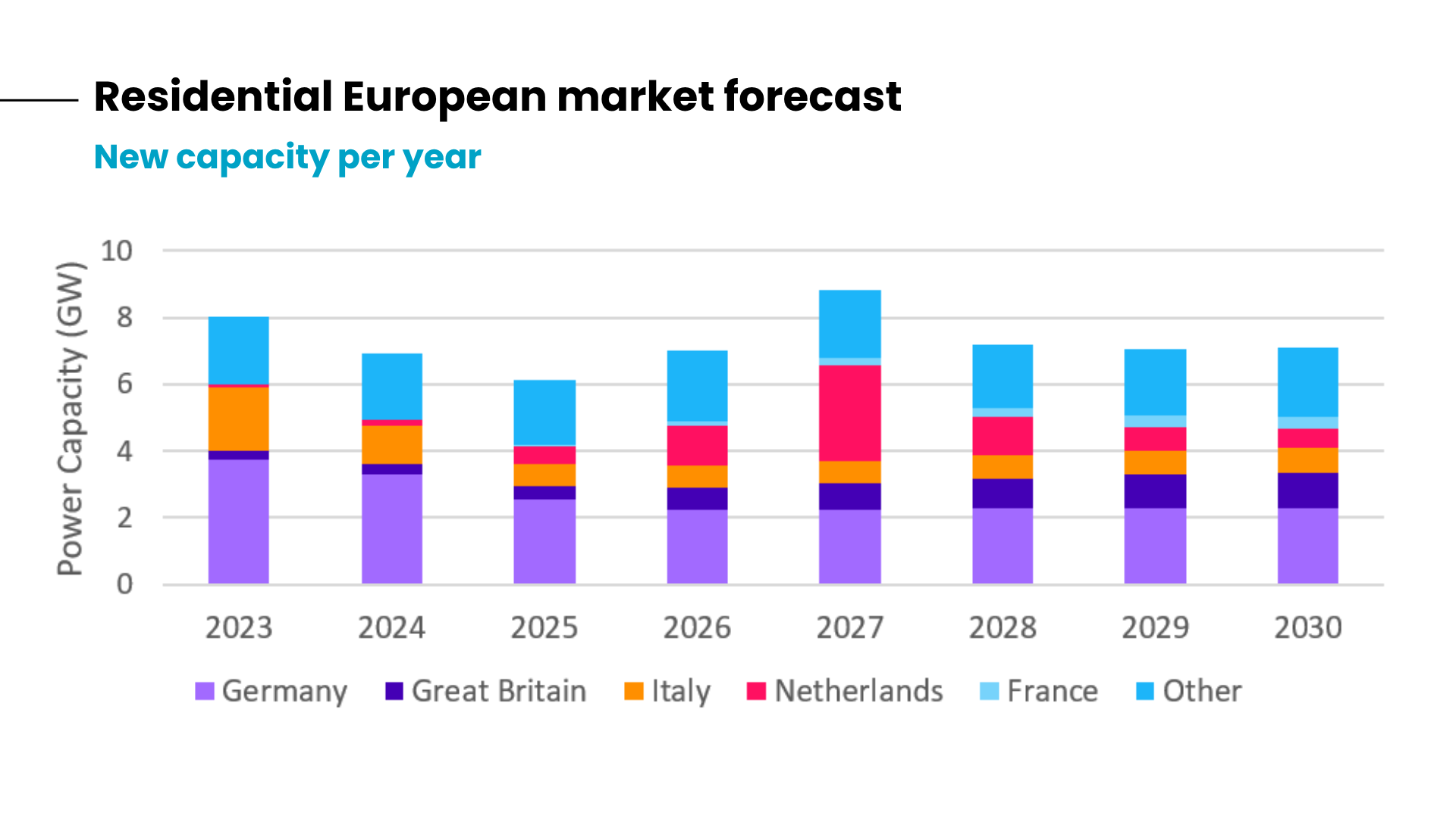
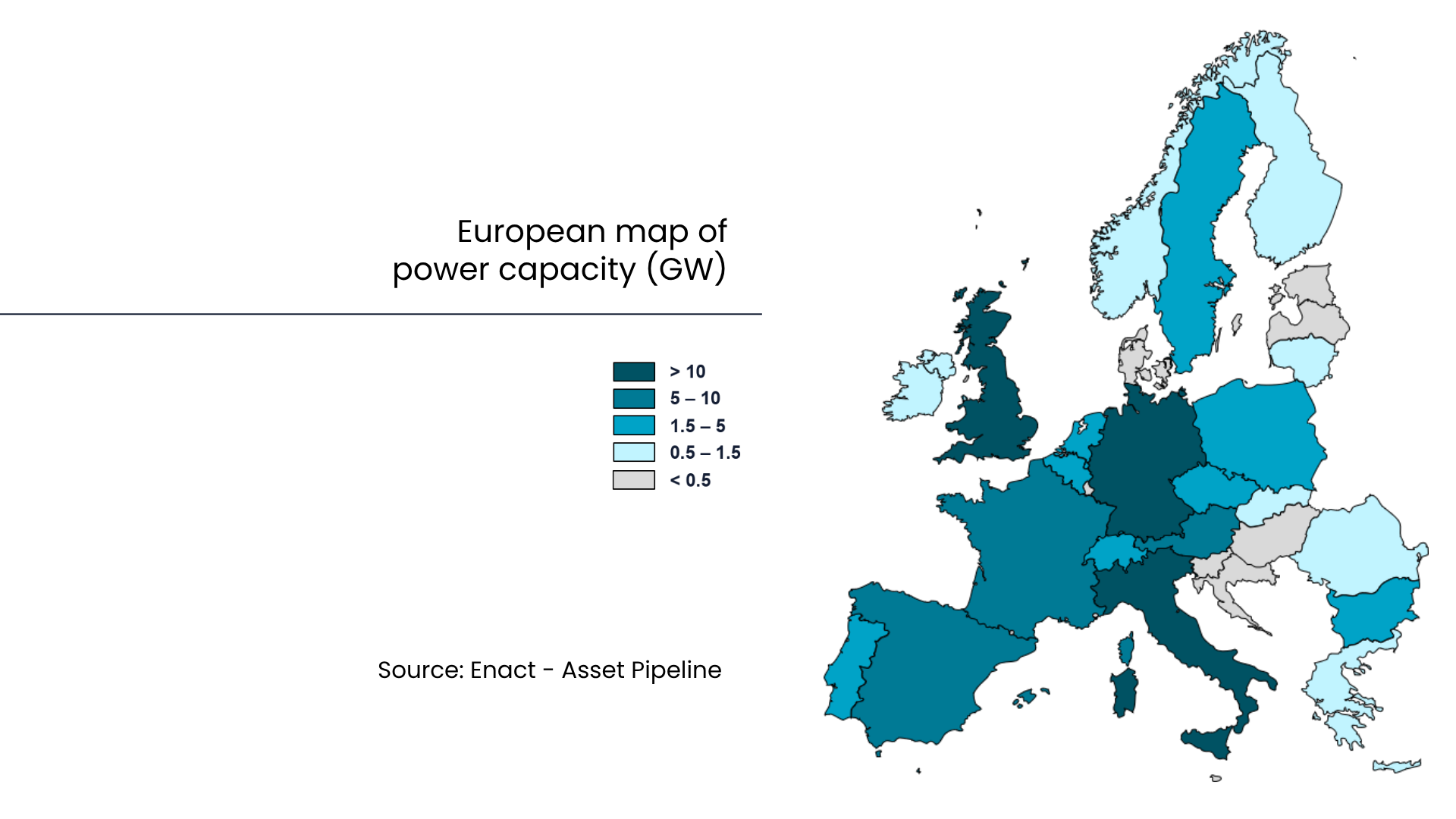
Behind-the-meter storage has been key to this progress, with 30.2 GW / 46.2 GWh of electrochemical capacity installed by the end of 2025, led by Germany, Italy, the Netherlands, Austria and Great Britain. Growth is being driven by solar-plus-storage adoption, the rollout of dynamic electricity tariffs, increasing electrification of homes and businesses, and participation in flexibility markets.
Front-of-the-meter battery storage has also expanded, reaching 18.5 GW / 34.4 GWh by the end of 2025. Momentum has been significant in countries with established capacity markets, including Great Britain, Italy, Poland and Belgium, as well as those with dedicated large-scale storage support schemes, such as Italy, Bulgaria, Poland and Spain
The full EMMES 10 report is available exclusively to members. For membership enquiries, contact us at memberships@energystorageeurope.eu
In 2025, Europe surpassed 100 GW of installed storage capacity for the first time, and by Q2 2026 storage overtook nuclear as a source of installed power capacity. With electrochemical storage forecast to grow by a further 153 GW by 2030, energy storage is becoming a core pillar of Europe's future electricity system.
Not a member yet ?
Explore the benefits of joining Energy Storage Europe
Energy Storage Europe replies to the European Commission’s public consultation on the Methodology for the Calculation of the recycled content of industrial and EV batteries. Under the Batteries Regulation, several categories of batteries, including industrial batteries, will have to contain a certain percentage of recycled metals to be allowed to be placed on the EU market.
Energy Storage Europe welcomes the proposed revision of the Network Code for generators and the explicit integration of storage, including grid-forming capabilities. Further clarity is needed on requirements for bidirectional storage and the treatment of existing projects.
In 2025, Europe surpassed 100 GW of installed storage capacity for the first time, and by Q2 2026 storage overtook nuclear as a source of installed power capacity. With electrochemical storage forecast to grow by a further 153 GW by 2030, energy storage is becoming a core pillar of Europe's future electricity system.
In 2025, Europe surpassed 100 GW of installed storage capacity for the first time, and by Q2 2026 storage overtook nuclear as a source of installed power capacity. With electrochemical storage forecast to grow by a further 153 GW by 2030, energy storage is becoming a core pillar of Europe's future electricity system.



 Energy storage has overtaken nuclear capacity, while the number of operating nuclear reactors has been steadily declining. The shutdown of nuclear plants in Germany has been the biggest contributor to this, removing around 11 GW of capacity, while Great Britain and Belgium have also decommissioned a significant number of reactors since 2016.