The Long and Short of It: Long Duration Energy Storage for Europe’s Future
On 15 September 2022, EASE together with Long Duration Energy Storage (LDES) Council co-organised a webinar "The Long and Short of It: Long Duration Energy Storage for Europe’s Future" to discuss long duration energy storage for Europe’s future.
Experts from the LDES Council and EASE presented the most recent reports, storage targets, and learnings of companies based in Europe who are leading the way for long duration energy storage.
Panellists discussed their viewpoints on Europe’s clean energy future and how storage provides flexibility and stability both with renewable energy sources and without.
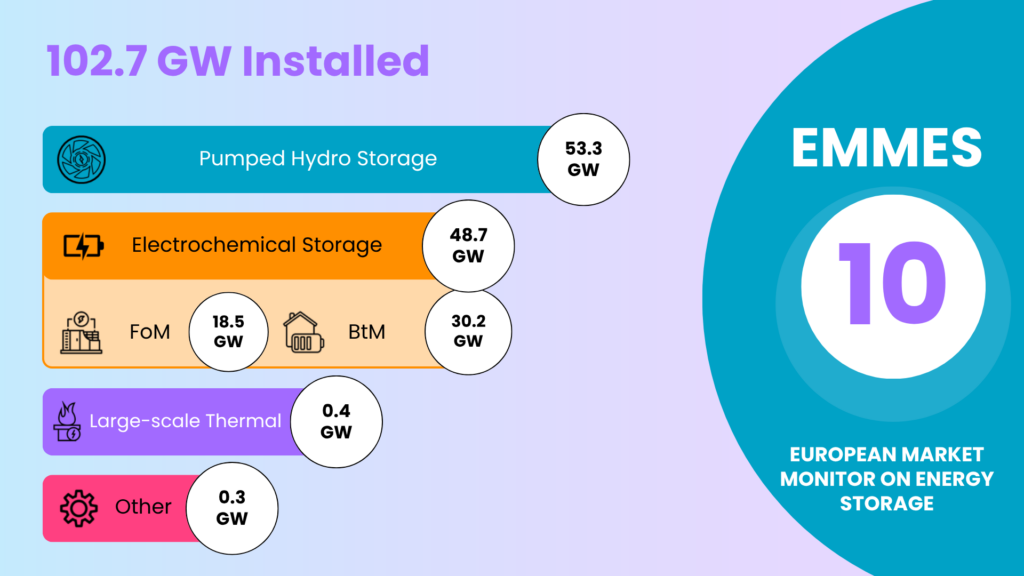
In 2025, Europe surpassed 100 GW of installed storage capacity for the first time, and by Q2 2026 storage overtook nuclear as a source of installed power capacity. With electrochemical storage forecast to grow by a further 153 GW by 2030, energy storage is becoming a core pillar of Europe's future electricity system.
In 2025, Europe surpassed 100 GW of installed storage capacity for the first time, and by Q2 2026 storage overtook nuclear as a source of installed power capacity. With electrochemical storage forecast to grow by a further 153 GW by 2030, energy storage is becoming a core pillar of Europe's future electricity system.
Thermal Energy Storage can help European industry decarbonise, reduce costs, and access new revenue streams. Yet significant regulatory, economic, and financial barriers continue to limit its deployment.
Energy Storage Europe welcomes the proposal for an Industrial Accelerator Act (IAA) and supports its overall objective of strengthening industrial capacity, accelerating decarbonisation, and creating stronger lead markets for strategic clean technologies in the European Union.